

Oracy
In English at Key Stage 1, children are encouraged to speak confidently and to listen to what others have to say. They are taught to read and write independently and with enthusiasm. In Literacy lessons children are taught a variety of skills which include word recognition, grammar, spelling, handwriting skills and compositional skills.
In Key Stage 2, children are taught to speak and write to suit different situations, purposes and information. In writing, they are taught to plan and draft their work, building on the work from Key Stage 1. We hope that all children will leave us with their own individual style of writing, reading coherently and fluently and being able to express themselves clearly.
Click below to learn about our Oracy Curriculum Intent, Implementation and Impact:
Intent
We are committed to closing the language and vocabulary gap that can limit pupils’ cultural capital. We actively create opportunities to strengthen pupils’ oracy skills and deepen their understanding of effective speaking and listening. Our curriculum, teaching and school ethos are all streamlined to nurture confident speakers, who can use their language skills to communicate with clarity both in school and in the wider society. By giving children access to rich and varied language beyond daily conversation, we help ensure that all pupils, particularly those who are disadvantaged, continue to make excellent progress alongside their peers.
Implementation
At St. Mary’s, pupils experience high-quality, language-rich talk through explicit teaching and purposeful dialogue with adults and peers. Teachers use a range of strategies to support and extend pupils’ communication, including modelling new vocabulary, rephrasing and extending children’s ideas, asking effective questions, providing accurate grammar, and helping pupils make connections between new and familiar concepts. Children are encouraged to speak in full sentences and practise these skills with both peers and adults. Vocabulary is taught deliberately with emphasis on tiered vocabulary to support precision of expression.
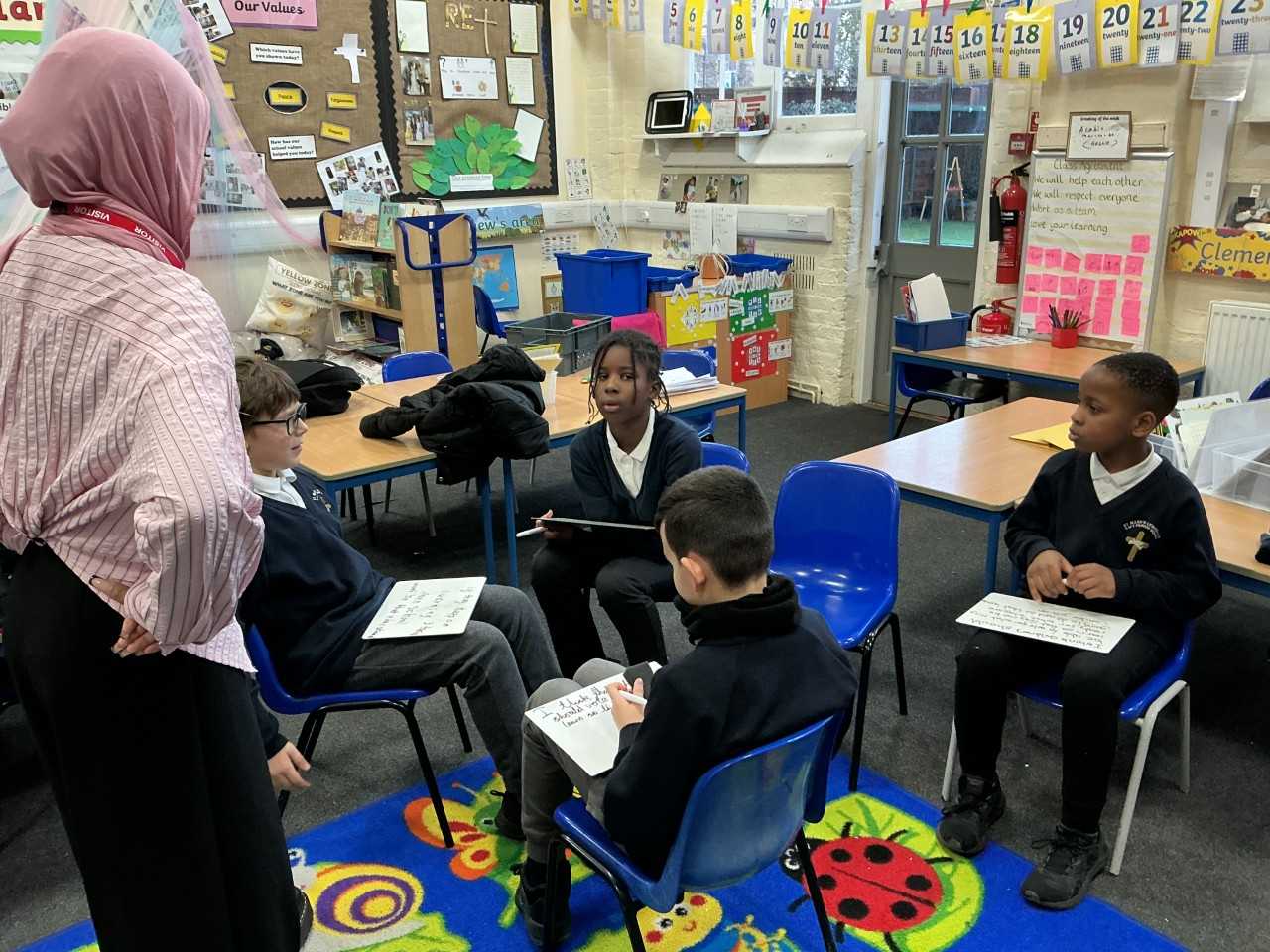
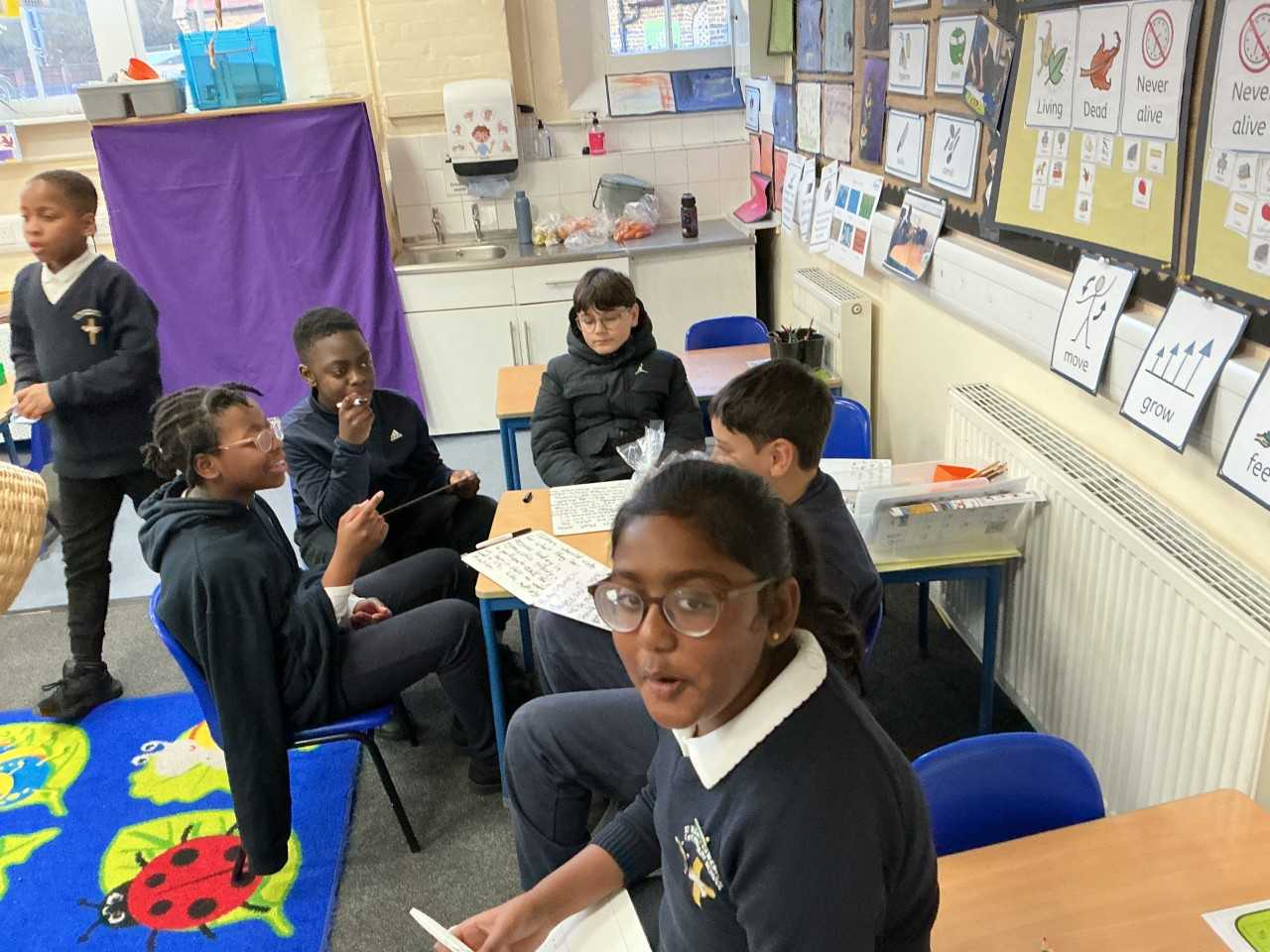
We strengthen speaking and listening through clear talk rules and the use of our Voice 21-aligned strategies such as concept cartoons; Yes, but; Opinion Lines; Would you rather…? and many more. Across the curriculum, pupils also use Agree, Build and Challenge strategies and sentence stems to support respectful, structured, purposeful discussion.
Talk Boost Intervention
Talk Boost is a small-group programme designed to help children develop their speaking and listening skills. It supports pupils in building confidence, expanding vocabulary, and forming clear, well-structured sentences.
Through fun and structured activities, children learn to:
- Take turns and listen carefully
- Join in conversations with peers and adults
- Use new words and phrases in context
- Understand and express ideas clearly
Talk Boost helps children catch up with age expected language skills, giving them the confidence to fully access classroom learning and engage in all areas of the curriculum.
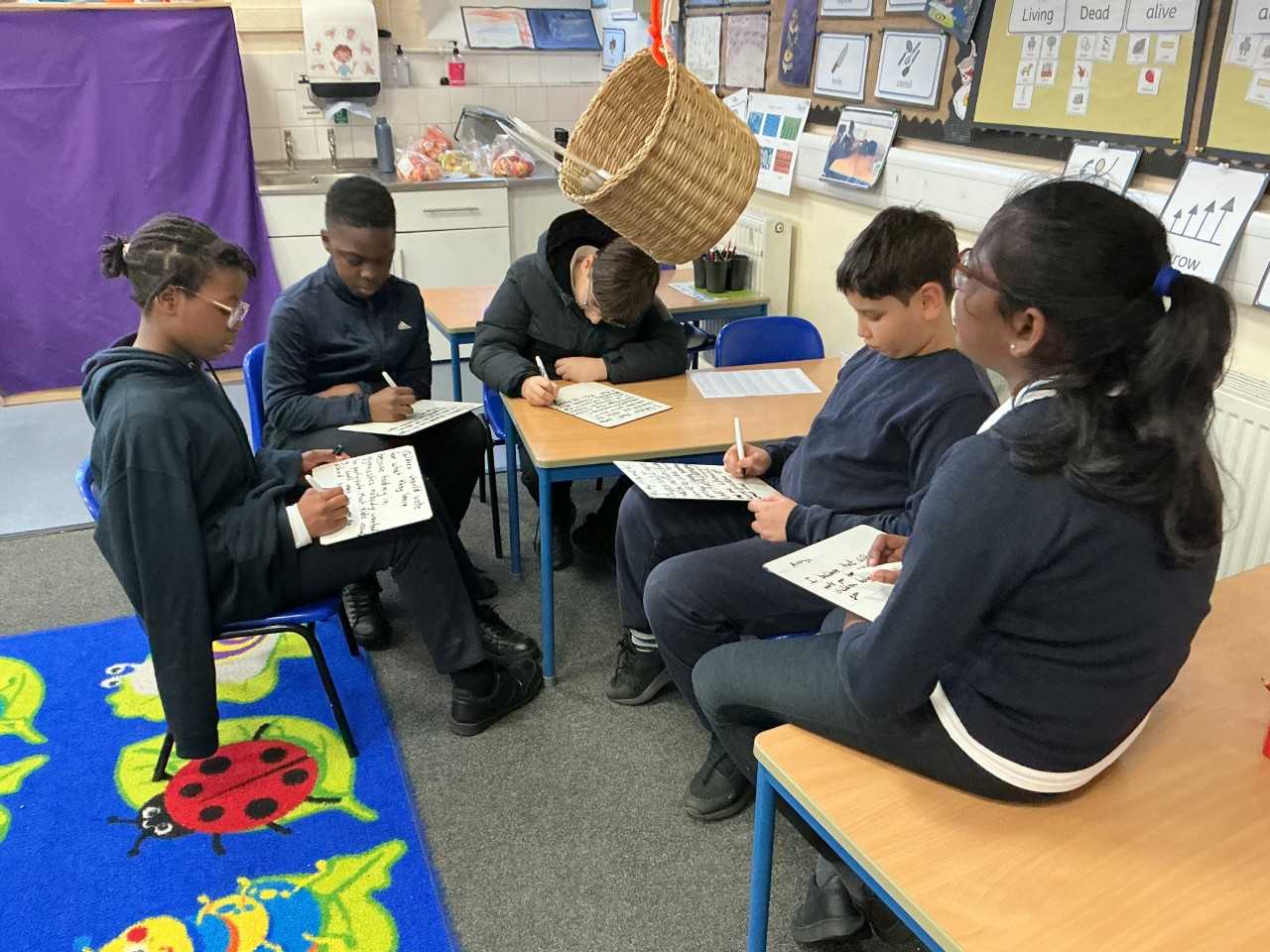
Curriculum Progression: Our Oracy curriculum supports children’s spoken language development across all subjects. Talk is used as a tool for thinking, helping pupils secure understanding and communicate clearly. Teachers model high-quality spoken language and create structured opportunities for pupils to practise speaking and listening in a range of formal and informal contexts. These include discussions, debates, presentations, role-play, storytelling, questioning and collaborative group tasks.
Assessment of Oracy is continuous and purposeful, informing planning and enabling targeted support for pupils who need additional scaffolding or intervention.
Impact
At St. Mary’s, we believe that developing strong speaking and listening skills helps children to become confident, articulate, and thoughtful communicators. Through our oracy-focused curriculum and wider school opportunities, pupils gain the confidence to express their ideas clearly, listen actively, and participate fully in their learning and community.
Pupil Voice in Action: our pupils are given many opportunities to share their opinions and contribute to school life. They take part in Eco-Council, Faith Groups, and Young Leaders initiatives, helping to make decisions that shape the school environment. Older pupils act as School Prefects, supporting younger children and modelling respectful, confident communication.
Opportunities: children regularly take part in activities that celebrate speaking and performance skills. These include Talent Shows, Poetry Competitions, and the Debate Mate Club, where pupils practise reasoning, presenting arguments, and speaking with confidence in front of peers.
The Impact We See
Pupils are more confident speaking in front of adults and their peers.
They listen attentively and respond thoughtfully in discussions.
Across all year groups, children are able to articulate ideas, ask questions, and collaborate effectively.
Participation in school groups and competitions develops leadership, resilience, and teamwork.
Pupils report feeling proud, heard, and motivated to share their ideas.
Through a focus on oracy, our children not only improve academically but also grow as confident, capable, and active members of our school community.
Poetry Competition
Our Annual Poetry Competition sees every class learning a poem by an inspirational author. In pour grand final, each class perform their poem, with a panel of judges choosing their favourite performance. Congratulations to our 2025 winners - Year 2!
Debate Mate
Our Oracy curriculum is enriched through our Year 5 and Year 6 pupils taking part in Debate Mate. They meet every week to practise their persuasive skills, before enjoying taking part in debating competitions against schools from across London.
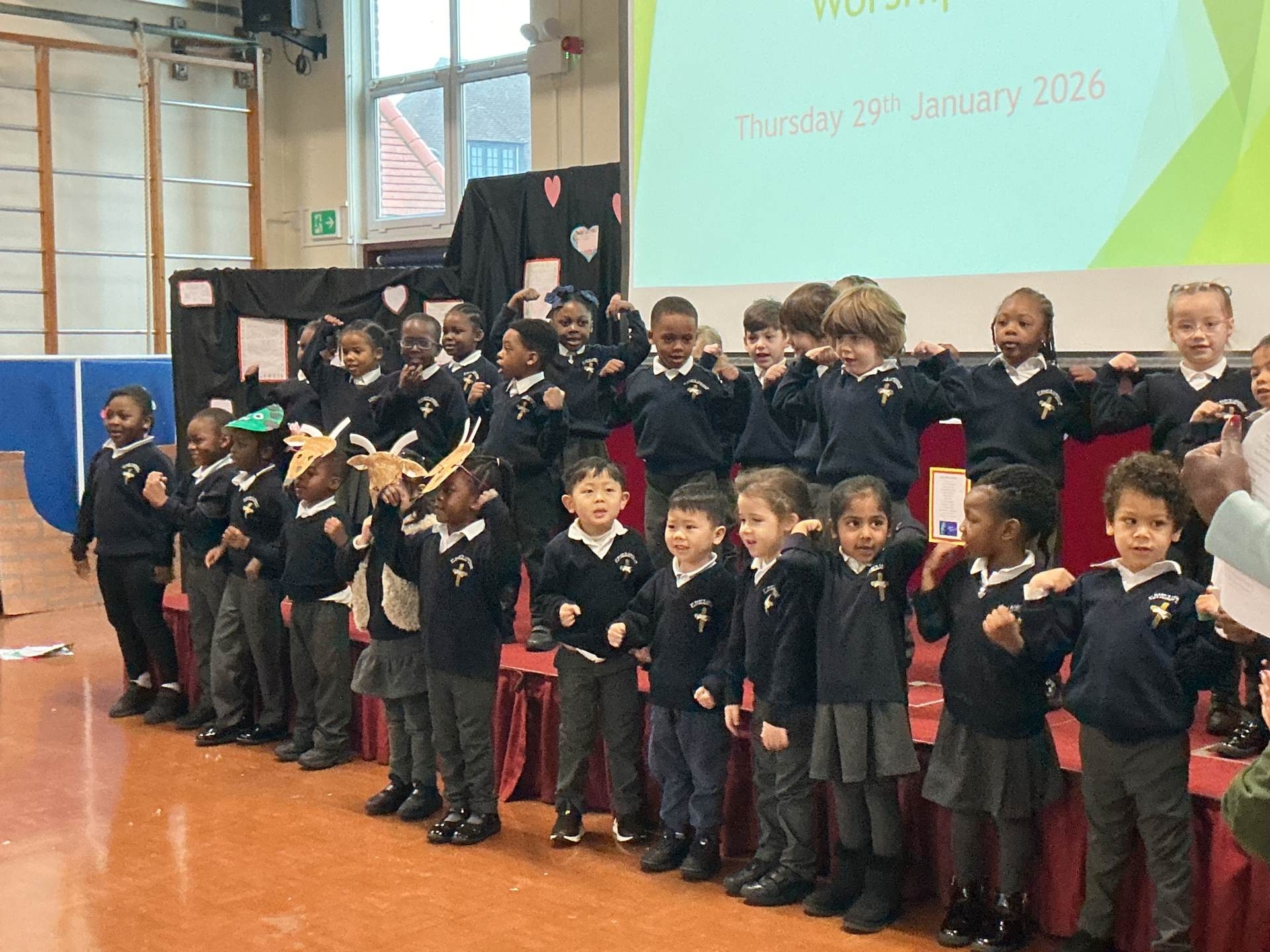
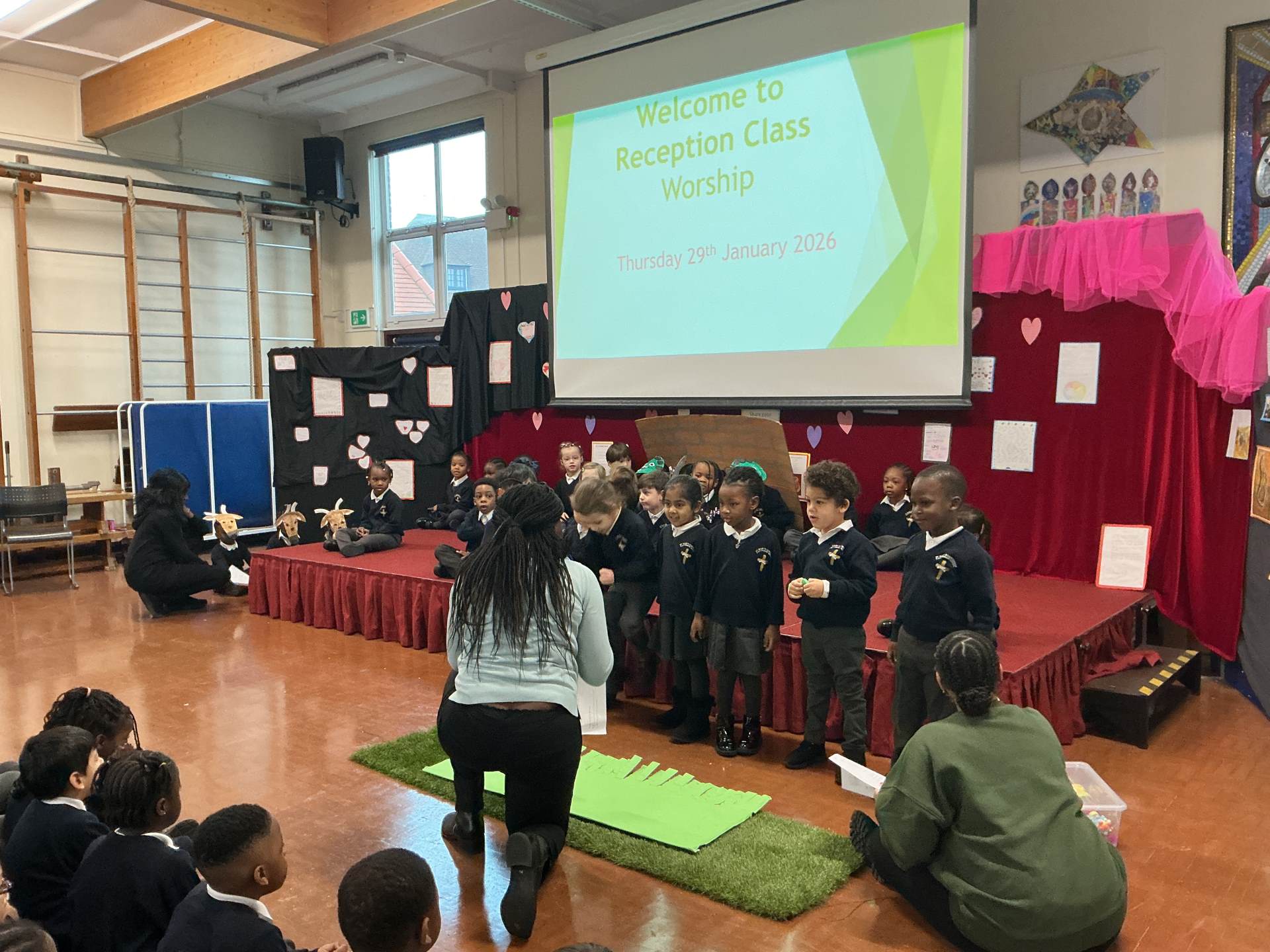
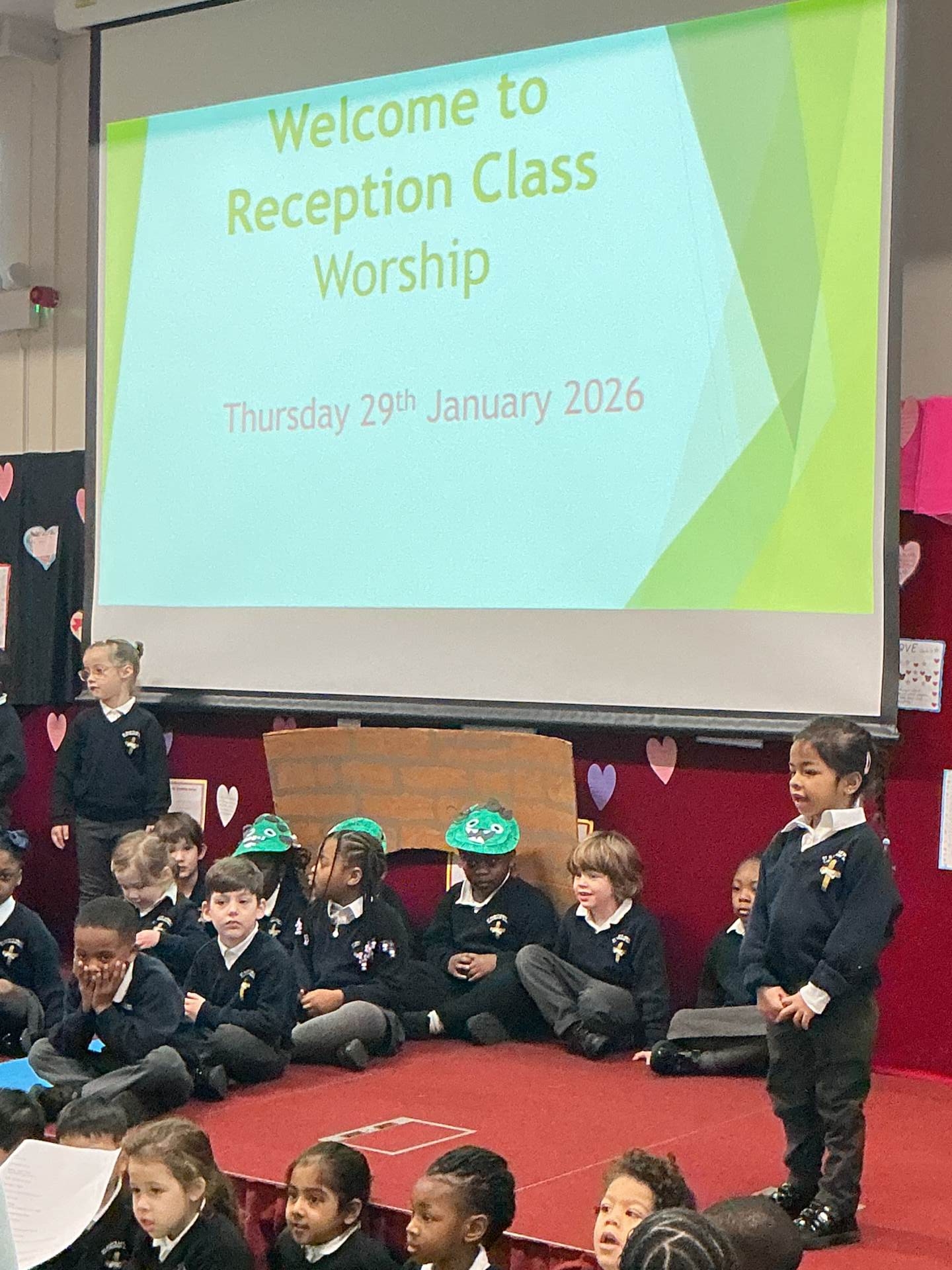
Reception class - The Three Billy Goats Gruff
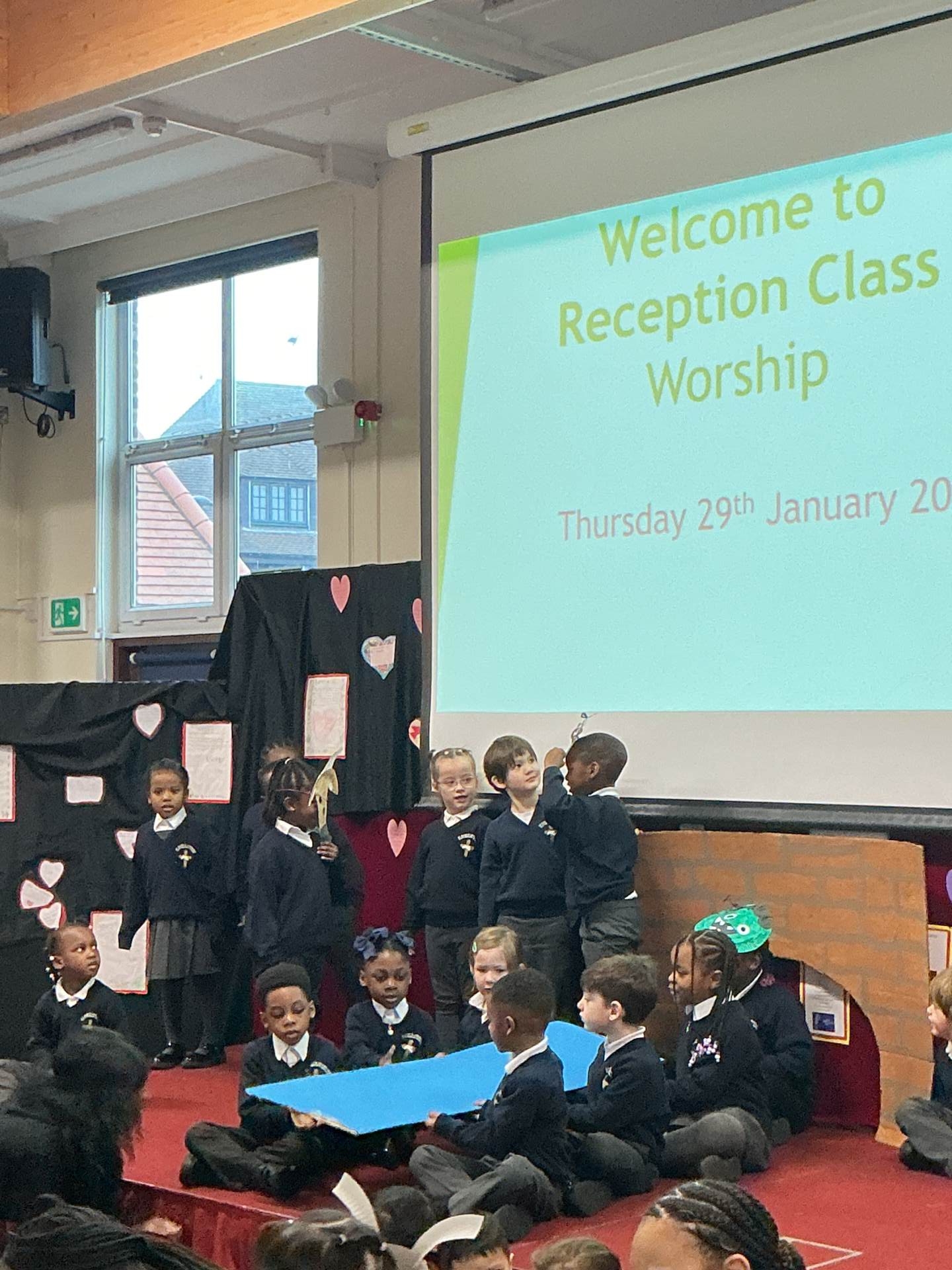
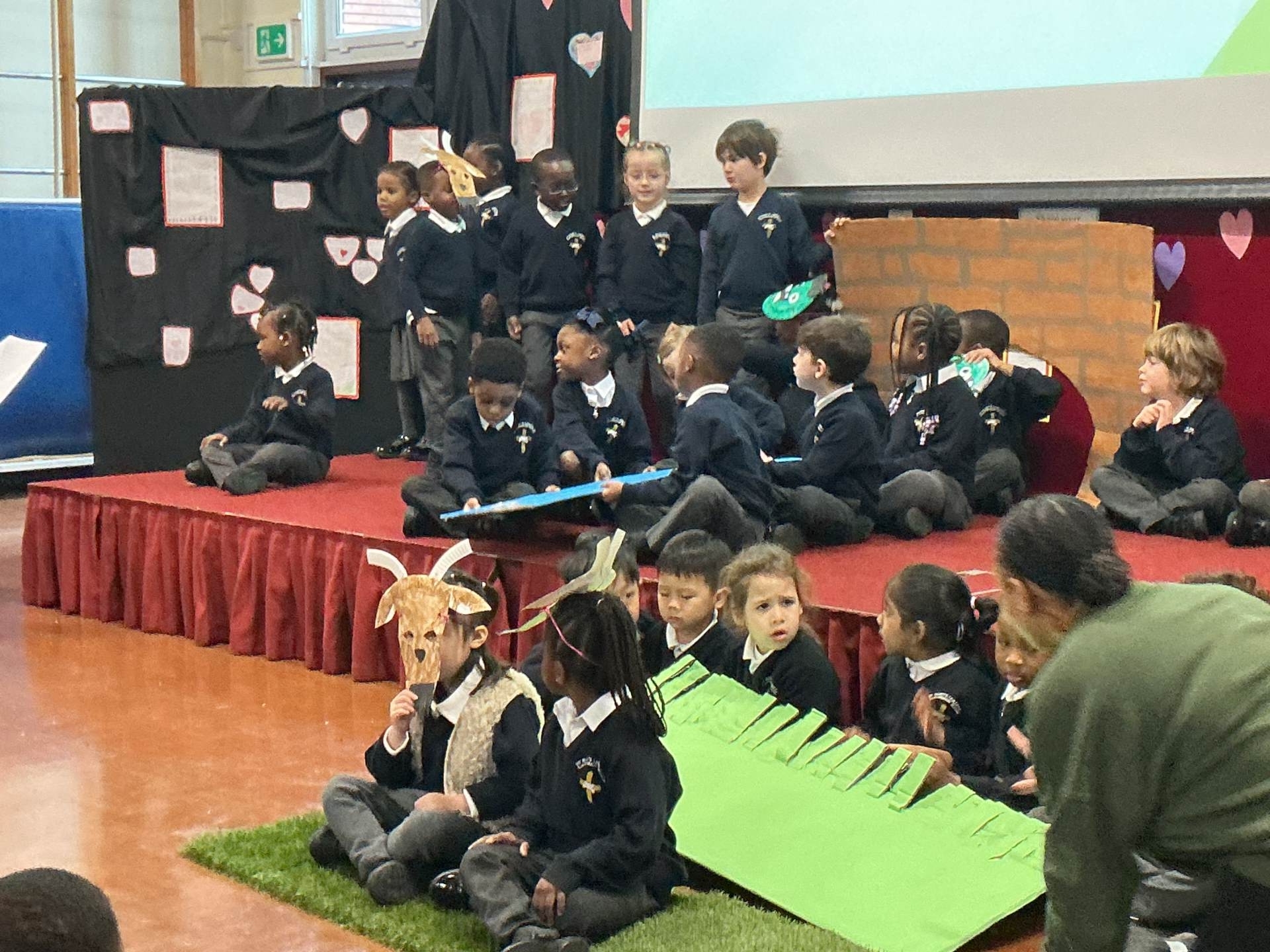
Reception class performed a wonderful retelling of 'The Three Billy Goats Gruff'. They designed and created props and masks and spoke clearly and confidently. Well done everyone!